Asin Tibuok Salt for Sale - Coconut Roasted Sea Salt “Dinosaur Egg” from the Philippines
Origin: Bohol Island, Philippines
We do not ship this product outside the US and Canada.
The perfect holiday gift for the foodie that has everything.
Supplies are limited -- so reserve yours today.
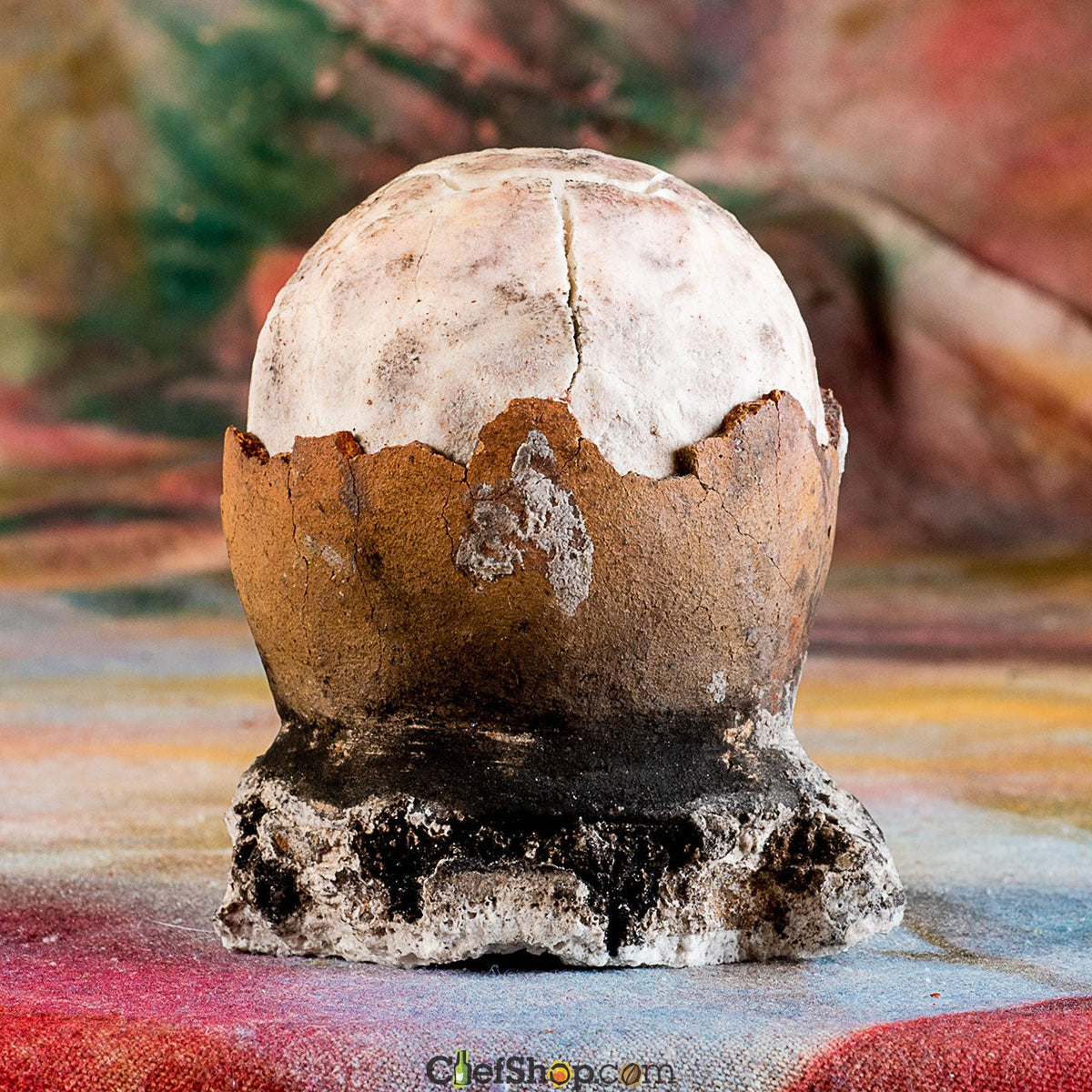
One of the world's most unusual traditional salts, Asin Tibuok is a remarkable culinary artifact from the island of Bohol in the Philippines. Often called “dinosaur egg salt” because of its striking orb shape, this artisanal sea salt is produced using a centuries-old process that transforms seawater, coconut husks, ash, clay, and fire into a solid mass of salt.
Its name is wonderfully literal: asin means “salt,” while tibuok means “whole.” Unlike ordinary sea salt, Asin Tibuok remains intact as one dense piece, partially enclosed in the clay vessel in which it was formed.
How Asin Tibuok Is Made
The process is slow, meticulous, and deeply rooted in Boholano food heritage. Coconut husks are soaked in seawater for months, absorbing salt from the sea. They are then dried and carefully burned to create a salt-rich ash called gasang.
Fresh seawater is filtered through the gasang, producing an intensely concentrated brine known as tasik. The tasik is poured into specially made clay pots and heated over fire. As the water evaporates, more brine is added, gradually building a solid mass of salt inside the vessel.
Eventually, the clay pot may crack from the heat, revealing the pale, egg-shaped block of salt within.
It is an astonishing amount of work to make one piece of salt.
A Living Culinary Tradition—Now Recognized by UNESCO
Asin Tibuok is more than a rare seasoning. It's the product of a living system of traditional knowledge involving salt making, pottery, coastal ecology, family labor, and skills passed from one generation to the next.
In 2025, UNESCO inscribed the practice of making Asin Tibuok on its List of Intangible Cultural Heritage in Need of Urgent Safeguarding. The recognition highlights both the cultural importance of the tradition and the challenges to its survival, including declining transmission to younger generations and environmental pressures on salt-making areas.
Also in 2025, Alburquerque Asin Tibuok was registered as a Philippine Geographical Indication, formally recognizing the connection between the salt and the coastal communities, natural resources, craftsmanship, and traditional knowledge of Alburquerque, Bohol.
What Does Asin Tibuok Taste Like?
Asin Tibuok has a clean, mineral salinity with subtle smoky complexity from its extraordinary production process. The Philippine Geographical Indication description specifically highlights smoky and gently sweet characteristics, along with a coconut aroma blended with sea salt.
Because it forms as a dense solid orb rather than loose crystals, Asin Tibuok is traditionally shaved, grated, chipped, or dissolved as needed.
Historically, whole pieces could even be suspended and dipped directly into soups or rice porridge to add salinity gradually.
How to Use Asin Tibuok
For modern cooking, the easiest approach is simple: use a Microplane or fine grater to shave a small amount directly over finished food.
Try it over grilled fish, shellfish, eggs, tomatoes, roasted vegetables, rice, grilled meats, fresh fruit, chocolate, caramel, or ice cream.
The salt is concentrated, so a little goes a long way.
Rare, beautiful, and culturally significant, Asin Tibuok is not simply a seasoning. It is a piece of living food history—and an extraordinary example of what can happen when seawater, coconut, clay, fire, and human knowledge are given enough time.
Product Details
Origin: Bohol Island, Philippines
Type: Traditional artisanal sea salt
Form: Solid salt orb in clay shell (“dinosaur egg”)
Serving Suggestion: Use a Microplane or fine grater to shave the salt over finished dishes just before serving.




 Click Email Me when in Stock
 Click Email Me when in Stock
 Click Email Me when in Stock


